You’ve probably seen “GSM” on a fabric spec sheet and kept moving. In a suit, that number matters more than you’d think. It stands for grams per square meter. What it really tells you is how a fabric feels, how it drapes, and how much structure it’ll give a finished suit.
That’s the short version. The long one? Let’s break it down.
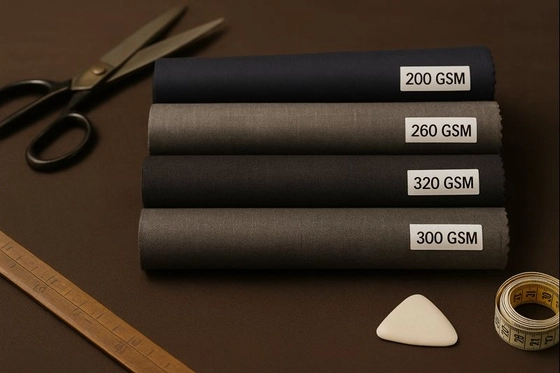
Suit fabric GSM is a measurement of weight. But it’s also a shortcut for understanding fabric thickness, density, and even breathability.
Some quick context:
You’ll see this info in any suit fabric weight chart, but what the numbers don’t say is how the suit will behave. Lighter cloth feels cool but can fall flat. Heavier fabric looks clean but might be overkill in the heat.

This is where the GSM meaning for suits starts to matter. If you’re making suits for tropical weather—South Asia, parts of the Middle East, even Southern Europe—light is key. Think tropical wool around 200 GSM, maybe linen blends.
For year-round wear, especially in cities with changing seasons, 250 GSM-ish is a sweet spot. Colder regions? Go heavier. 300+ GSM wool, flannel, and even heavier blends. The extra weight gives structure and warmth.
Regional preferences vary. Buyers in London or Toronto often want something more substantial. In Southeast Asia, anything above 250 GSM might sit on the rack.

Here’s something most guides don’t touch: fabric GSM affects construction choices too. A really light cloth can’t support a full canvas well. It ends up looking soft, even droopy, which isn’t good for business suits. In those cases, a soft fusible interlining gives enough support without stiffening the jacket too much.
Heavier fabrics? You can build in more shape. Full canvas, padded shoulders—no problem. The fabric holds it.
One more thing. GSM influences how much fabric gets wasted. Lighter cloth shifts more during cutting. That means you lose accuracy, and waste increases. With heavier fabric, it’s easier to layer and cut cleanly, but you can’t stack as high. That matters when you’re producing at scale.
So yes, GSM plays a role from start to finish.
Suit fabric GSM is a decision-maker. It shapes how a suit performs, how it feels, how it’s built, and how smoothly it runs through production. If you’re serious about getting fit, structure, and comfort right, this should be part of your fabric weight guide.
Want help choosing fabric with the right weight for your market or design? Baoxiniao works with mills across GSM ranges, from lightweight summer blends to structured winter wool.
Contact us and let’s find what fits.

The 2025–2026 fall and winter season brings five key suit trends that are shaping menswear collections worldwide. As a suit manufacturer with over 25 years of production experience, Baoxiniao breaks down each trend with specific sourcing and manufacturing implications — so brand owners and retailers can translate runway direction into production-ready decisions. Luxury and Retro […]

Quiet luxury men—that phrase captures more than just clothes. It’s a movement toward elegance without logos, exclusivity without flash. For buyers and industry insiders, this shift is redefining what power dressing and high-end menswear mean in 2025–26. What Is Quiet Luxury? The quiet luxury trend (aka stealth wealth, old money aesthetic men) isn’t new, but […]

How long should dress pants be? It’s a question that seems simple until you’re standing in front of a mirror, wondering if the hem is too high or puddling over your shoes. The answer comes down to one thing: pant break or the way your pants rest on your shoes. This guide breaks down the […]
ADDRESS: BAOXINIAO OFFICE BUILDING, BAOXINIAO INDUSTRIAL PARK, YONGJIA, ZHEJIANG