Black-tie doesn’t always mean black tux. The rules are still there, but the choices have expanded — lapels, fabric, cut, even color. If you’re standing in a fitting room, flipping through options, here’s what each one actually means.
To better understand tuxedo styles, here is a quick overview of the most common types:
– Classic black tuxedo
– Peak lapel tuxedo
– Shawl lapel tuxedo
– Notch lapel tuxedo
– Double-breasted tuxedo
– Velvet tuxedo
– White dinner jacket
Best for: Weddings, black-tie events
Formality: High
Key feature: Satin lapel and classic black finish
Single-button. Satin lapel. Matching black pants. It’s the standard, and for good reason. Clean, easy to wear, no surprises. You’ll see it at weddings, galas, anything labeled “black tie.” If you only wear a tux once every five years, this is the one people hand you. It works.
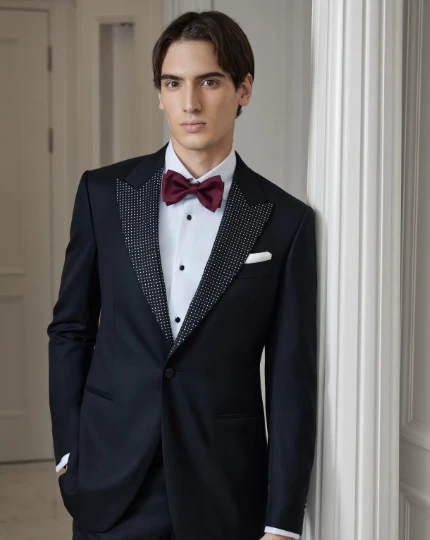
Best for: Formal events, evening occasions
Formality: High
Key feature: Sharp upward-pointing lapels
This version feels a bit more built. The lapels point upward, adding a sharp line through the shoulders. Subtle, but it changes the whole shape of the jacket. Feels a little more serious than the smooth shawl style. Looks great on nearly everyone.
Best for: Evening wear, modern formal looks
Formality: Medium–High
Key feature: Smooth, rounded lapel shape
Shawl collars are softer. Not literally — just visually. They round off the edges. They show up a lot in velvet, which tells you something: people wear them when the night’s formal, but not stiff. More red carpet than ballroom. Still tuxedo territory, but looser at the edges.
Notch lapels belong on suits. You’ll find them on some tuxedos, but that doesn’t make them right. They’re fine for parties that say “black tie optional” or weddings with a looser dress code. But if the invitation just says “black tie,” skip this one.
Double-breasted tuxedos aren’t common. That’s the point. Strong shoulders, wrapped front, four or six buttons. Feels vintage, almost military. You need confidence to wear one — or at least good posture. But done right, it’s one of the sharpest tuxedo styles out there.
You’ve seen it in old movies: white or off-white jacket, satin lapels, black trousers. It’s formal, but lighter. Usually worn in warmer weather. Think rooftop weddings, summer dinners, anything that involves a terrace. Feels classic without being predictable.
Velvet tuxedo jackets aren’t for everyone. But for some events — winter parties, evening receptions, gallery things — they’re perfect. Deep green, dark red, navy. No shine, just richness. Usually paired with simple black pants and a plain shirt. It’s a look.
Technically not a tux, the smoking jacket still sneaks into formalwear now and then. Usually velvet, sometimes silk, often with a belt. It started as loungewear. Now it’s a wildcard move at the right kind of event. Not black tie. But close enough, sometimes.
While each tuxedo style has its own personality, one of the most important design elements is the lapel. Understanding lapel differences can help you refine your choice further.
Peak lapels are sharp and formal, often used in traditional black-tie settings.
Shawl lapels have a smooth, rounded shape, offering a more elegant and modern appearance.
Notch lapels are more similar to standard suits and are typically considered less formal.
| Tuxedo Type | Formality | Best For |
|---|---|---|
| Classic Black | High | Weddings |
| Peak Lapel | High | Formal events |
| Shawl Lapel | Medium-High | Evening |
| Velvet | Medium | Parties |
Once you know the types of tuxedos out there, it gets easier to pick one that fits the event — and actually feels like you.
Choosing the right tuxedo ultimately comes down to the event, your personal style, and how formal you want to appear. By understanding the different types and their characteristics, you can make a more confident decision.
Looking for one that fits right and looks sharp? Check out Baoxiniao’s collection and find the tux that speaks your style, or contact us for more info.
What are the different types of tuxedos?
Classic, peak lapel, shawl lapel, velvet, and double-breasted tuxedos are the most common.
What is the most formal tuxedo style?
The classic black tuxedo with peak lapel is considered the most formal.
Are velvet tuxedos formal?
They are less formal and more fashion-forward, often used for parties.
What lapel is best for a tuxedo?
Peak lapel is the most formal, followed by shawl lapel.
The 2025–2026 fall and winter season brings five key suit trends that are shaping menswear collections worldwide. As a suit manufacturer with over 25 years of production experience, Baoxiniao breaks down each trend with specific sourcing and manufacturing implications — so brand owners and retailers can translate runway direction into production-ready decisions. Luxury and Retro […]
Quiet luxury men—that phrase captures more than just clothes. It’s a movement toward elegance without logos, exclusivity without flash. For buyers and industry insiders, this shift is redefining what power dressing and high-end menswear mean in 2025–26. What Is Quiet Luxury? The quiet luxury trend (aka stealth wealth, old money aesthetic men) isn’t new, but […]

How long should dress pants be? It’s a question that seems simple until you’re standing in front of a mirror, wondering if the hem is too high or puddling over your shoes. The answer comes down to one thing: pant break or the way your pants rest on your shoes. This guide breaks down the […]
ADDRESS: BAOXINIAO OFFICE BUILDING, BAOXINIAO INDUSTRIAL PARK, YONGJIA, ZHEJIANG