The global bespoke suit market was valued at $4.8 billion in 2024 and is forecast to reach $8.6 billion by 2033, at 6.5% CAGR. More buyers are investing in tailored garments and paying closer attention to where the construction traditions behind those garments actually come from. The Italian vs British suit question comes up a lot in those conversations. And it is a fair one because the two are genuinely different in ways that matter.
They look different. They fit differently. They come from tailoring philosophies that developed separately over centuries and never fully converged.
In this guide, you will learn:
| Feature | Italian Suits | British Suits |
| Shoulder | Soft, little to no padding | Structured, padded, sometimes roped |
| Silhouette | Slim, close-fitting, modern | Structured, defined, traditional |
| Jacket Length | Shorter, higher on the hip | Longer, covers more of the seat |
| Chest | Open, relaxed V-shape | Closed, structured chest |
| Construction | Lightweight, less canvas | Full canvas, more internal structure |
| Fabric | Lightweight, breathable | Heavier fabrics like tweed and worsted wool |
| Comfort | Flexible, easy movement | Firm, supportive feel |
| Overall Style | Elegant, fashion-forward | Formal, authoritative |
| Best For | Warm climates, modern business, events | Formal settings, corporate, colder climates |
| Visual Impression | Effortless and relaxed | Sharp and powerful |
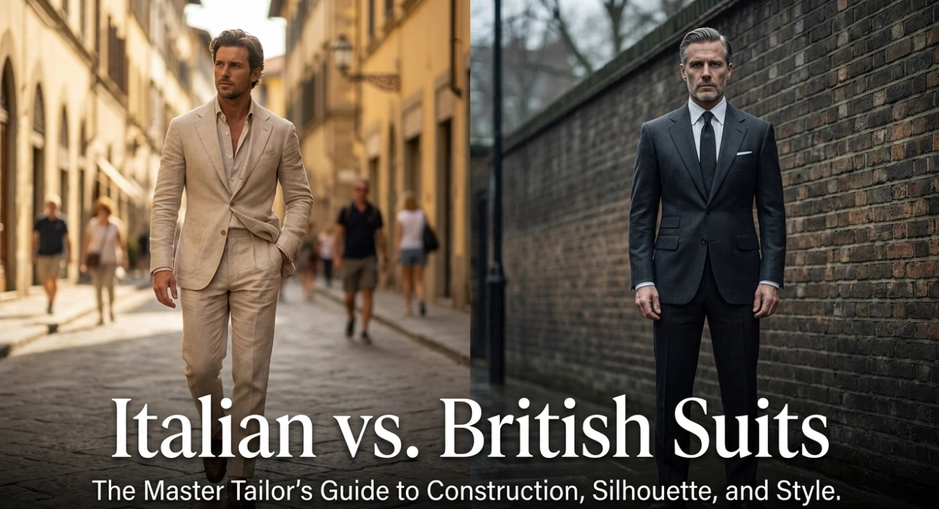
Start with the shoulder. That is where the Italian vs British suit difference is most obvious.
Italian suits use a soft shoulder. Little padding, sometimes none at all. The sleeve head sits naturally rather than being roped or structured into a sharp line. The result is a jacket that drapes rather than holds. It moves with the person wearing it instead of maintaining a fixed silhouette regardless of what that person is doing.
The jacket itself tends to run shorter. Higher on the hip. The lapels are often wider. The chest is more open, with less canvas underneath than you would find in a British cut. A lot of Italian-style suit construction uses half lining or quarter lining rather than full, which reduces weight and lets the fabric breathe. In warm weather, that matters a lot.
Milan is the reference point most people use. Clean lines, refined construction, elegance that looks effortless rather than deliberate. Known for its refined tailoring and modern silhouette, the Italian style suit is built around how the wearer looks in motion, not just standing still. Manufacturers like Baoxiniao, with R&D centers running out of both Shanghai and Milan, interpret and adapt these construction principles for global markets, which is part of how Italian sensibility ends up in suits produced at manufacturing scale outside Italy.
Different philosophy entirely.
A British suit is built to hold its shape. Padded shoulders, suppressed waist, longer jacket sitting lower on the hip. The chest is canvassed and constructed to project a silhouette that does not change whether you are sitting, standing, or moving around a room. That structure is the whole point.
Savile Row is where this tradition lives. The tailors there developed a construction method over generations around full canvas chests, hand-stitched lapels, and a formal silhouette built to communicate authority. Heavy worsteds and tweeds are the fabrics most associated with it, which suit the British climate and the occasions these suits were originally made for.
The Italian suit vs English suit difference in the shoulder is the easiest place to start when you are trying to tell them apart. British shoulders are clean, structured, and slightly roped at the sleeve head. Put both suits on a hanger, and the British one holds its silhouette. The Italian one relaxes into a soft drape. That single difference tells you a lot about what each tradition values.
Soft or unpadded shoulders. Wider lapels. Lighter fabric. Half or quarter lining. Shorter jacket length. Lower button stance that opens up the chest into a wider V shape.
That last one is easy to miss, but it is consistent. Italian suits button lower. British suits button higher. The Italian chest looks open and relaxed. The British chest looks closed and formal. Same garment category, completely different visual outcome.
Pocket style is another indicator worth knowing. Italian suits tend toward jetted pockets or patch pockets on casual models. British suits lean toward flap pockets in a more traditional placement, higher on the hip.
Neither, really. Wrong question.
Italian suits are better for warm climates, fashion-forward markets, and buyers who want elegance and ease. British suits are better for formal occasions, colder weather, and buyers who want structured authority that lasts decades. The Italian vs British suit comparison does not have a winner. It has two different answers to two different briefs.
The better question is which construction tradition fits the market you are buying for.
Italian vs British suit is drape versus structure. Soft shoulder versus roped shoulder. Open chest versus closed chest. Neither is objectively better. They serve different markets, different climates, and different buyers.
For enterprise clients and boutique buyers who need suits that reflect either tradition at scale, Baoxiniao’s C2M programme builds to specification across both construction styles. Get in touch to talk through what you need.
The 2025–2026 fall and winter season brings five key suit trends that are shaping menswear collections worldwide. As a suit manufacturer with over 25 years of production experience, Baoxiniao breaks down each trend with specific sourcing and manufacturing implications — so brand owners and retailers can translate runway direction into production-ready decisions. Luxury and Retro […]
Quiet luxury men—that phrase captures more than just clothes. It’s a movement toward elegance without logos, exclusivity without flash. For buyers and industry insiders, this shift is redefining what power dressing and high-end menswear mean in 2025–26. What Is Quiet Luxury? The quiet luxury trend (aka stealth wealth, old money aesthetic men) isn’t new, but […]

How long should dress pants be? It’s a question that seems simple until you’re standing in front of a mirror, wondering if the hem is too high or puddling over your shoes. The answer comes down to one thing: pant break or the way your pants rest on your shoes. This guide breaks down the […]
ADDRESS: BAOXINIAO OFFICE BUILDING, BAOXINIAO INDUSTRIAL PARK, YONGJIA, ZHEJIANG