In today’s modern wedding celebrations, grooms are transitioning from traditional to modern colors. When choosing custom tuxedos for weddings, grooms now avoid the usual black and navy blue to represent their identities.
While brides can also choose their wedding theme based on color, grooms can now do the same. This change enables B2B retailers and tailors to create made-to-measure suits that provide a custom experience.
This guide explores the different colors beyond the traditional black and blue colors. You will also learn how tailors and manufacturers guide clients in the selection process.
Choosing the right color is more than an aesthetic preference. It is a technical decision influenced by several environmental and biological factors.
Lighting can greatly affect how you see the color. At present, manufacturers are guiding clients based on these lighting profiles and color recommendations:
When the wedding will occur and where it will take place are crucial factors in decision-making. It is vital to consider the season, too. The weight and texture of the fabric will determine the comfort of the wearer. It will also affect how the color is perceived.
Professional tailors analyze a client’s skin undertones to ensure the suit color provides a healthy contrast rather than washing them out.
For example, a “cool” skin undertone may be better suited to a platinum blue. “Warm” undertones look better in camel or mocha.
For B2B retailers guiding a client in selecting wedding suit colors, aesthetics are as important as technical fit. You must have a deep understanding of how environment, season, and fabric science work together to create a comfortable and aesthetic design.
Determining what color of suit wedding parties prefer depends heavily on the season and venue. While midnight blue remains a timeless choice for custom tuxedos for wedding events, we are seeing a rise in contemporary wedding suits featuring emerald greens, deep burgundies, and textured charcoal.
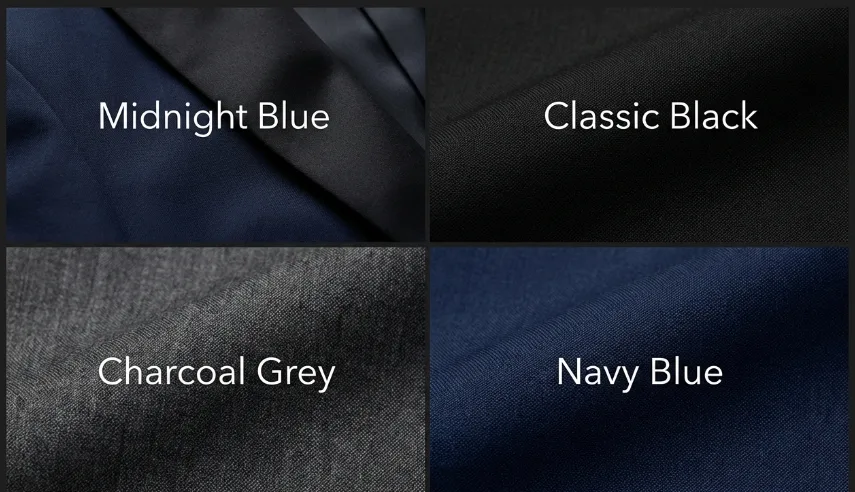
Traditional colors are the foundation of any made-to-measure suits program. This is due to their versatility across various lighting conditions and formal settings. Let’s look at the different color variations for traditional contemporary wedding suits:
| Traditional Hue | Best Season | Venue/Environment | Recommended Fabric | Technical Note |
| Midnight Blue | Year-Round | Indoor Ballrooms, Evening Events | Super 120s Wool or Silk-Mohair | Silk content adds sheen for artificial lighting. |
| Classic Black | Winter / Autumn | High-formality “Black Tie” | Wool Barathea or Grain de Poudre | Deep matte finish for maximum lapel contrast. |
| Charcoal Grey | Spring / Autumn | Registry Offices, City Weddings | Wool-Cashmere Blend | Cashmere adds softness for daytime comfort. |
| Navy Blue | All Seasons | Cathedrals, Corporate Venues | Super 100s Worsted Wool | The most versatile fabric for MTM programs. |
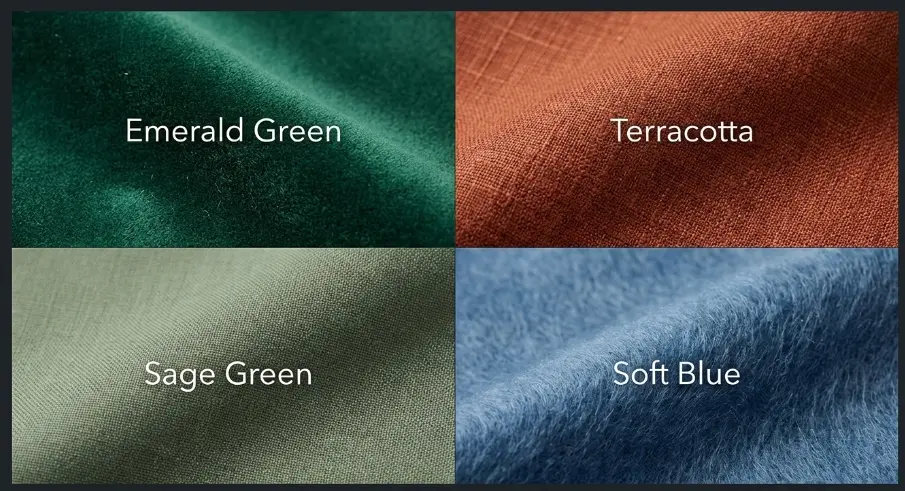
Modern contemporary wedding suits utilize non-traditional colors to reflect the specific atmosphere of the wedding location. Here are some of the popular choices of modern wedding suit colors:
| Modern Hue | Best Season | Venue/Environment | Recommended Fabric | Technical Note |
| Emerald Green | Winter / Autumn | Historic Estates, Forests | Heavy Wool Flannel or Velvet | High dye-absorption for deep color saturation. |
| Terracotta / Rust | Summer / Autumn | Vineyards, Desert settings | Linen-Silk Blend | Silk prevents the linen from over-wrinkling. |
| Sage Green | Spring / Summer | Garden or Botanical settings | Tropical Wool or Hopsack | Open weave for maximum breathability in heat. |
| Soft Blue | Spring / Summer | Beach or Coastal ceremonies | Mohair-Wool Blend | Moisture-wicking fibers for humid environments. |
The fabric choice directly impacts how a personalized suit is manufactured. Different textiles, such as high-twist wools versus linen blends, react differently to industrial pressing and humidity.
Our C2M system identifies these textile properties at the data-entry stage. We account for specific fabric shrinkage and drape during the initial pattern-making phase. This ensures the final garment matches the digital design with a 1mm tolerance.
The precision remains consistent regardless of whether the client chooses a traditional heavy wool or a modern lightweight linen.
The transition from an idea to a finished garment is managed through the made-to-measure suits workflow. Manufacturers act as consultants, bridging the gap between “trendy” and “timeless.”
| Service Area | Manufacturer Input | Client Benefit |
| Color Curation | Provides “swatch bunches” from mills like Loro Piana or Vitale Barberis Canonico. | Access to exclusive wedding suit colors not found in retail. |
| Fabric Engineering | Recommends high-twist wools for wrinkle resistance or silk-blends for sheen. | A suit that looks as sharp at the end of the night as it did at the start. |
| Design Logic | Advice on lapel width (peak vs. shawl) and button stance based on body type. | A silhouette that enhances the wearer’s physical frame. |
The process of creating custom tuxedos for wedding events involves a standardized men’s suit measurement chart. Unlike off-the-rack options, a made-to-measure manufacturer takes 20+ measurements to adjust a base pattern for:
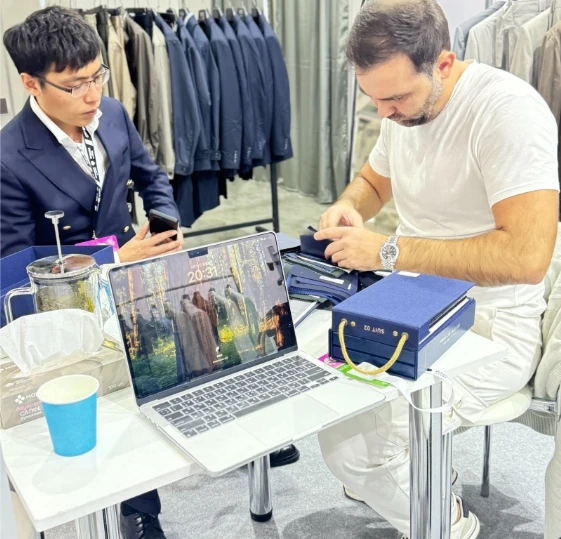
Mastering custom tuxedos for wedding production relies on how retail data and factory execution align seamlessly. By replacing static suit sizes for men with a “One-Person, One-Version” model, your brand can offer custom quality at an industrial scale.
Baoxiniao’s commitment to quality is backed by international certifications, including ISO 9001 for quality management and ISO 14001 for environmental standards. Our 1mm production tolerance and high-speed global delivery ensure that every made-to-measure suit order arrives with a perfect first-time fit.
We make sure that all orders arrive within 7 to 15 days, even during the high-peak wedding season.
Our B2B supply ability ensures your wedding clothing business stays ahead of evolving trends. We prioritize personalized suit selections through custom color selection and precise engineering.
We maintain a zero-defect sales business through rigorous fixed system store monitoring, ensuring every garment meets the highest standards of excellence.
Only 3% of men wear a suit to work regularly, according to Gallup. 44% of Americans never wear one at all. Yet business professional attire still exists as a real dress code category that matters in specific industries and specific rooms. The shift toward casual is real. So is the confusion between business vs business […]
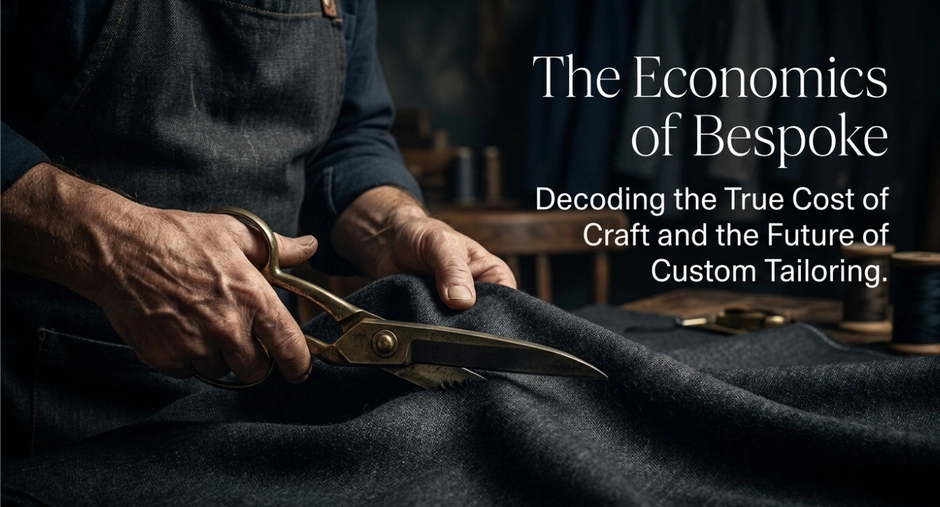
The global bespoke suit industry was valued at $4.8 billion in 2025 and is heading toward $8.6 billion by 2034, at 6.7% CAGR. Europe holds 34.2% of that spending. Men account for 72.6% of bespoke buyers. That tells you something. People are putting real money into custom clothing, and the first thing anyone wants to […]
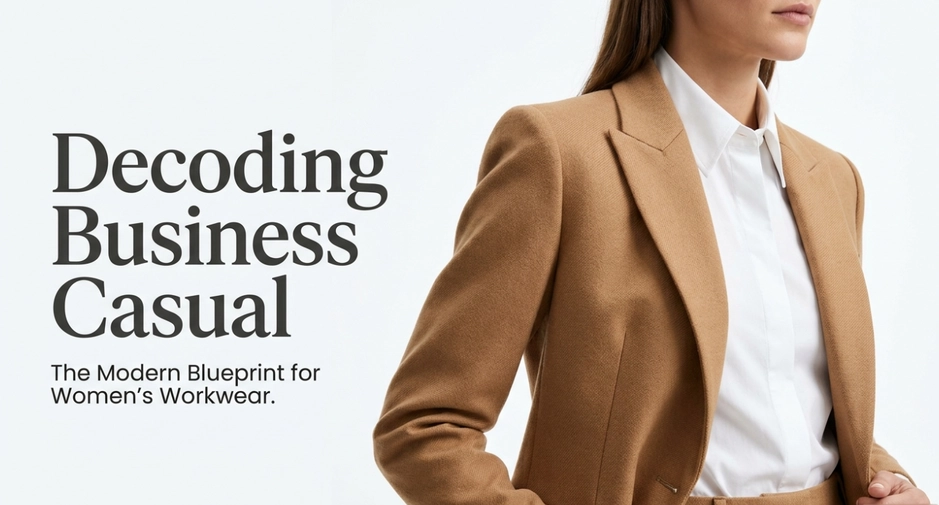
51% of women say they wear business casual clothing most days at work, according to Gallup. Blouses, dress pants, dressy jeans, skirts. That is the majority of the female workforce navigating a dress code that nobody has fully agreed on. What a business casual woman in a law firm looks nothing like what it means […]
ADDRESS: BAOXINIAO OFFICE BUILDING, BAOXINIAO INDUSTRIAL PARK, YONGJIA, ZHEJIANG