In businesses all over the world, looking presentable, especially in business meetings and events, is vital. Your overall look not only speaks of you as an individual but also represents the company you work for. That is why it is important to find a supplier of tailored men’s suits that you can rely on.
For hospitality groups, event planners, and corporate entities, the decision between tux rental vs purchase is more than a style choice. It is a strategic financial move. In the professional B2B sector, managing a wardrobe fleet requires balancing initial investment against long-term operational efficiency.
This article guides you in sourcing bespoke suiting without sacrificing your budget. You will also explore whether buying a tux for permanent staff or sourcing luxury rental inventory suits your business revenue.
As a business owner, you must first evaluate whether to rent or buy a tuxedo. One must look at the “cost-per-wear” metric. Renting offers low immediate costs, but you also need to consider the immediate need and design.
With a B2B purchase of formal wear, you can ensure that the garments can be used for a long period of time. Plus, you can also customize it according to your company’s branding. Your employees can also choose the perfect fit that they can be comfortable in.
Below are other factors to consider in buying a tux or renting one:
In a commercial setting, buying is more tax-efficient than renting. Unlike rental fees, which are lost “sunk costs,” standardized suits are business assets that build equity. These assets can also be depreciated over time to provide tax benefits.
By sourcing tailored men’s suits directly from manufacturers, businesses reduce long-term expenses and increase profit margins.
For example, a luxury hotel chain needs premium tuxedos for 50 front-desk staff members. Renting 50 tuxedos for four major corporate events per year at $150 per suit results in a total annual cost of $30,000. They are considered “sunk costs” because the money has already been spent and cannot be recovered.
On the other hand, a hotel can invest $25,000 for 50 tailored suits from a direct manufacturer. These suits now become “capital assets” instead of a recurring expense. The hotel now owns $25,000 worth of inventory, which adds to the company’s total equity.
Under tax regulations, the suits are “depreciating” items. Thus, if the suits have a useful life of five years, the hotel may be able to deduct $5,000 from its taxable income annually. Therefore, the hotel not only saves on tax but also saves on rental costs per year.
The primary advantage of buying a tux for business use is the precise customization involved. Unlike consumer-grade retail, B2B formal wear is designed for industrial-level cleaning and frequent use. Each piece of clothing has:
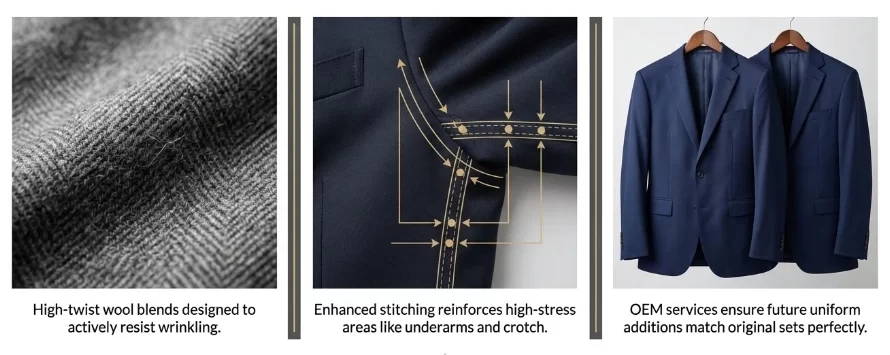
On the other hand, some companies prefer to rent if there are no regular gala events that require formal wear. The decision to rent or buy a tuxedo also depends on the scale of the event.
Rental is a short-term solution for one-off gala themes where the specific style may not be needed again. However, for recurring corporate needs, rentals often lack the precision of bespoke suiting or custom bespoke suit options that define a premium brand image.
For corporate clients, deciding between a rental program and a direct purchase depends on workforce stability, branding requirements, and capital allocation. The following table compares these two approaches within the Baoxiniao ecosystem:
| Feature | Rental Program | Direct Purchase |
| Upfront Cost | Low; monthly or quarterly fees. | High; initial capital expenditure for inventory. |
| Maintenance | Included (laundry, repair, and replacement). | Client-managed or outsourced separately. |
| Flexibility | High; easy to scale up/down for seasonal staff. | Low; requires storage and management of surplus. |
| Customization | Limited to standard fits and basic branding. | The client owns the garments. |
| Ownership | Baoxiniao retains assets. | Client owns the garments. |
| Best For | High-turnover roles (e.g., hospitality, logistics). | Executive leadership and stable corporate teams. |
Baoxiniao integrates Western tailoring standards with industrial efficiency. This results in bridging the gap between high-end bespoke quality and large-scale manufacturing.
The company also ensures that every garment maintains a professional silhouette. This is made possible by adopting European pattern-cutting techniques and structural reinforcements.
This foundation is amplified by a smart-manufacturing infrastructure. The facility spans across 118 acres and utilizes automated cutting systems and rigorous professional quality inspections. This allows us to produce up to 2 million pieces annually.
Mass customization also allows us to deliver the expertise of our master tailors at the speed and volume required by global corporations.
To support diverse business models, Baoxiniao offers a two-tier strategic sourcing framework:
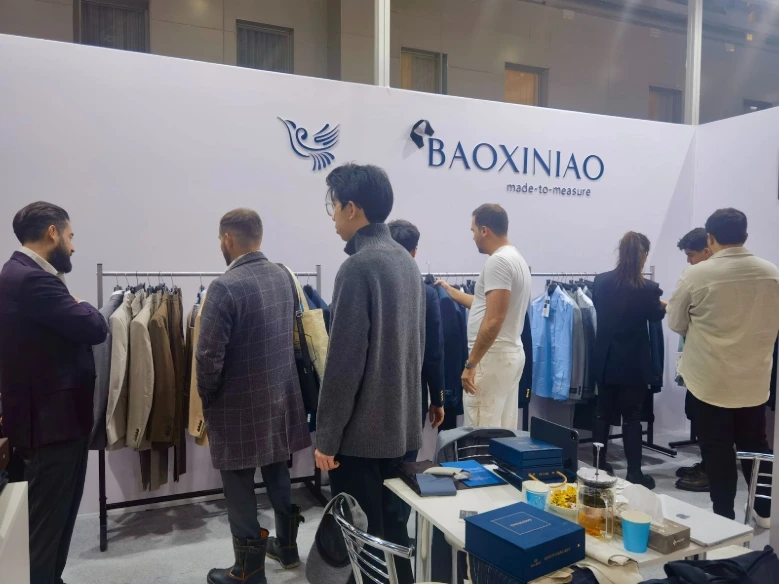
In the debate of tux rental vs purchase, the data points toward purchasing for any business looking to maximize ROI and maintain a premium brand image. By investing in tailored men’s suits engineered for long-term use, you eliminate the logistical headache of returns and the variable quality of rental stocks.

The 2025–2026 fall and winter season brings five key suit trends that are shaping menswear collections worldwide. As a suit manufacturer with over 25 years of production experience, Baoxiniao breaks down each trend with specific sourcing and manufacturing implications — so brand owners and retailers can translate runway direction into production-ready decisions. Luxury and Retro […]
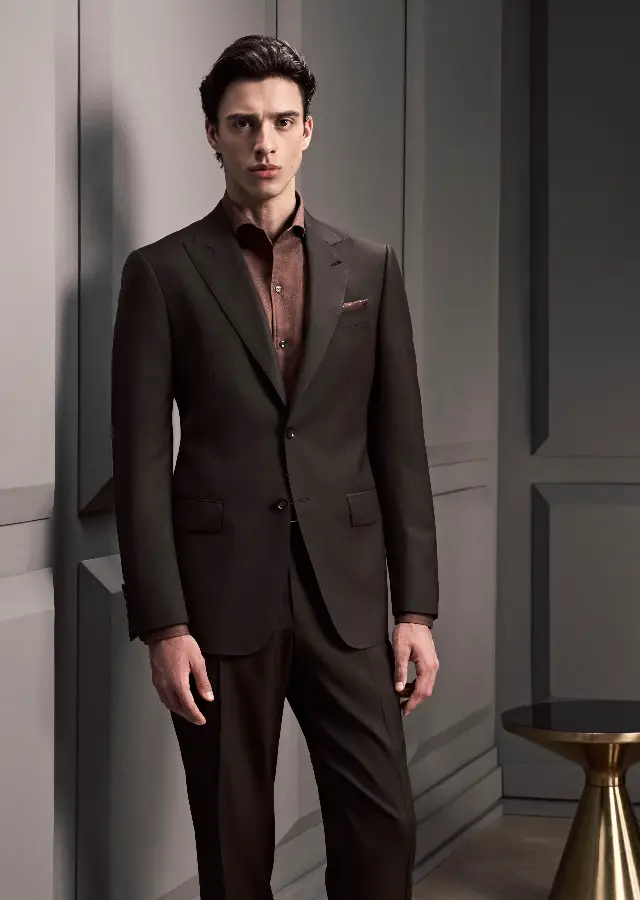
Quiet luxury men—that phrase captures more than just clothes. It’s a movement toward elegance without logos, exclusivity without flash. For buyers and industry insiders, this shift is redefining what power dressing and high-end menswear mean in 2025–26. What Is Quiet Luxury? The quiet luxury trend (aka stealth wealth, old money aesthetic men) isn’t new, but […]

How long should dress pants be? It’s a question that seems simple until you’re standing in front of a mirror, wondering if the hem is too high or puddling over your shoes. The answer comes down to one thing: pant break or the way your pants rest on your shoes. This guide breaks down the […]
ADDRESS: BAOXINIAO OFFICE BUILDING, BAOXINIAO INDUSTRIAL PARK, YONGJIA, ZHEJIANG