In the global garment trade, “close enough” is a recipe for financial loss. For a B2B retailer, the difference between a successful custom suit measurements profile and a returned garment often comes down to millimeters. With a brand’s Made-to-Measure (MTM) program, the primary problem is rarely the fabric quality. Most of the time, it is due to the errors in the initial fitting.
Bad fits don’t just cost one sale. They trigger a chain reaction of expensive returns, shipping fees, and lost customers. Beyond the cost of the physical return, brands face shipping surcharges, logistical carbon footprints, and, most critically, the erosion of customer trust.
This article explores how Baoxiniao addresses measurement errors through a “One-Person, One-Version” philosophy. You will also learn how AI-driven industrial intelligence with traditional tailoring ensures lower return rates and high-efficiency production.
To navigate the world of premium menswear, one must understand how different sizing logics impact the final fit. While methods range from mass-market scales to precision adjustments, the shift toward data-driven systems is redefining industry standards.
Manufacturers must accurately measure for suit to prevent the costly fitting errors that lead to high return rates and production waste. This section explores the three primary measurement frameworks and how they determine the success of a tailored garment.
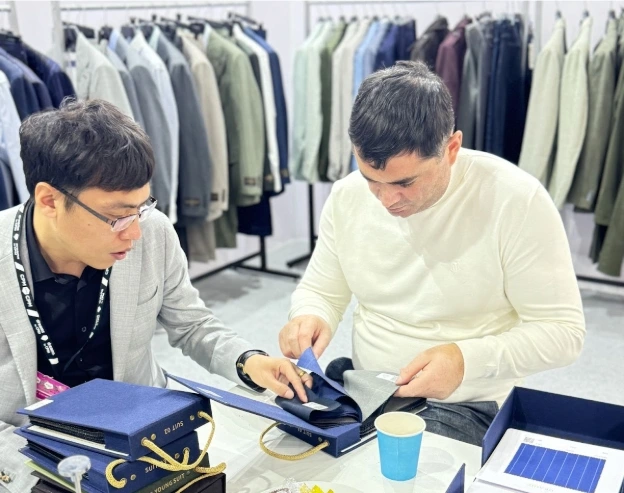
RTW relies on static suit sizes for men based on standardized population averages (e.g., EU 48, US 38R). While efficient for inventory, these scales fail to account for unique anatomical variances like asymmetrical shoulders or prominent blades.
Most retail MTM programs start with a “master garment.” The fitter records deviations from this base size. However, this is where many tailored suit measurements go wrong. If the fitter only adjusts the sleeve length but ignores the scye (armhole) depth, the garment will never feel truly “custom”.
Unlike MTM, which modifies an existing block, our C2M (Customer-to-Manufacturer) system generates a unique CAD pattern for every client. We use high-precision Western measurement equipment to capture every detail of a client’s body. This ensures that specific posture, incline, and girth are built directly into the core pattern.
High return rates in custom clothing are usually signs of a breakdown in the “Point-to-Point” measurement process.
Many emerging brands attempt to save costs by having customers provide their own custom suit measurements via online forms. In an OEM environment, this is high-risk.
Untrained individuals often measure over bulky clothing or fail to keep the tape measure level across the back. Without a professional suit measurements chart to act as a tether, these data points lack the technical “logic” required for high-end manufacturing.
Our system identifies these “outlier” data points automatically using AI, flagging measurements that are anatomically improbable before they reach the cutting floor.
A major problem in B2B manufacturing is that “fit” often gets lost in translation between the retailer and the factory. A retailer’s idea of a “Slim Fit” might involve a 4-inch drop, while the factory’s default might be 6 inches.
To solve this, Baoxiniao utilizes a men’s suit measurement chart that is standardized across our digital ecosystem. This ensures that “Point A to Point B” means the same thing in a London showroom as it does in our high-efficiency production facility.
We replace vague terms like “short” or “tight” with exact measurements in millimeters. This precision allows us to achieve a first-time fit rate that is much higher than the industry average.
Baoxiniao transforms traditional tailoring into high-tech data science. By integrating advanced digital systems with precision manufacturing, we ensure that every garment aligns perfectly with the client’s unique physical profile.
Our facility does not just sew fabric, we also process data.

Mastering tailored suit measurements is not just about the skill of a single tailor. It is also about the synergy between retail data and factory execution.
For brands and retailers, high return rates and sizing discrepancies are among the traditional risks of custom suit measurements. These are now being neutralized by the shift toward C2M (Customer-to-Manufacturer) ecosystems.
Business can provide a bespoke experience by moving away from static suit sizes for men and embracing the “One-Person, One-Version”model. This leads to industrial-scale efficiency in suit manufacturing.
Understanding how to measure for a suit jacket remains a fundamental skill. However, its value is now amplified by AI intelligence that flags errors before they become costly mistakes.
At Baoxiniao, we utilize fine standard Western measurement equipment alongside high-speed global delivery systems. This commitment ensures that every suit measurement chart sent to our facility results in a garment with a perfect first-time fit.
We invite B2B partners to leverage our C2M infrastructure to reduce overhead, eliminate fit-related friction, and deliver garments guaranteed to a 1mm tolerance.

In today’s modern age of technology, more people switch to being home-based entrepreneurs. One of the most challenging and profitable niches is the fashion industry. With this change, individual creators and aspiring entrepreneurs can compete with big brands from the comforts of a home office. However, for a small clothing business, the traditional “supply chain” […]
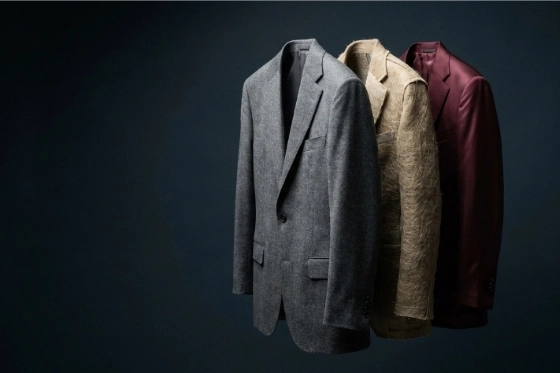
A masterfully crafted jacket’s shape depends on more than just the outer fabric. It relies on the complex structure hidden beneath the surface. Understanding the mechanics of suit construction is essential in suit manufacturing. This helps retailers and custom-made tailors create garments that feel like a second skin than an armor. Internal suit layers represent […]
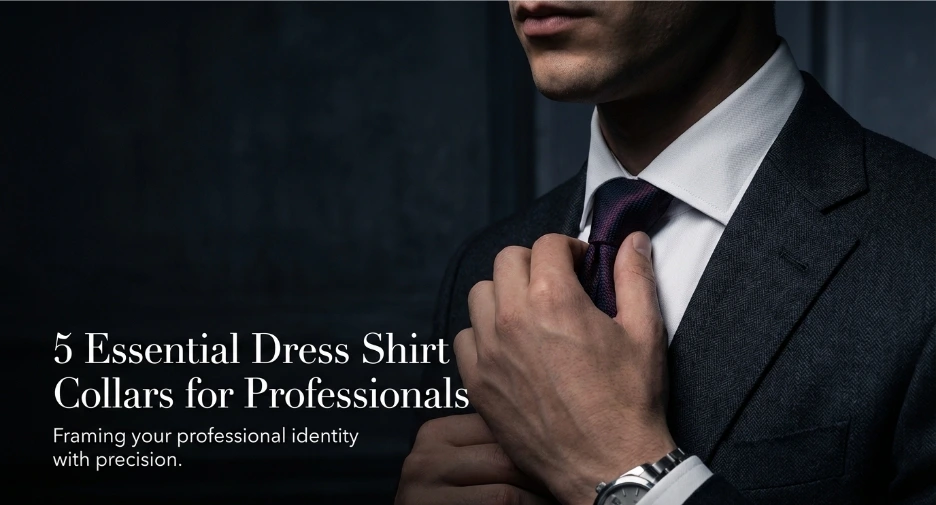
The dress collar of a shirt frames your face. It also works with your shirt lapels to establish your professional image. Whether you’re investing in bespoke shirts or choosing ready-to-wear options, understanding collar styles is a crucial decision. Selecting a clothing collar that aligns with the proportions of your jacket and tie is an effective […]
ADDRESS: BAOXINIAO OFFICE BUILDING, BAOXINIAO INDUSTRIAL PARK, YONGJIA, ZHEJIANG