One of the most important decisions for fashion brands is to choose between a domestic suit factory and an overseas clothing production in China. This decision affects the long-term success of both boutique lines and corporate buyers.
For most consumers, the “Made in USA” label is an effective marketing strategy. However, the rivalry between China Clothing Manufacturers vs American manufacturers is closing in. Chinese manufacturers are winning due to the rapid growth of intelligent marketing.
This guide compares both manufacturers to help you identify the best MTM suit manufacturers for your specific scale and quality requirements.
The United States has a significant history of garment production, but today the industry exists primarily as a high-end niche market.
The American textile industry transitioned from mass production to high-tech specialization. In the 19th and early 20th centuries, the U.S. was a global leader in clothing manufacturing. They accounted for 95% of domestic clothing as late as the 1960s.
However, as production costs rose, most large-scale factory suit operations moved overseas. Today, the best clothing manufacturers in the US focus on “micro-manufacturing” and small-batch handcrafted production.
Key historical and industrial facts relevant to manufacturing in China vs. the USA include:
| Category | Strengths of US Production | Critical Limitations |
| Market Value | The “Made in USA” label remains a powerful marketing tool for premium domestic brands and “Buy American” initiatives. | Unit costs are significantly higher due to wage standards and overhead. This makes them inaccessible for entry-level luxury brands. |
| Logistics | Shorter shipping distances for North American clients lead to a reduced carbon footprint and faster domestic delivery. | Most US factories lack the heavy industrial infrastructure required for rapid, large-scale production runs. |
| Operations | Immediate proximity to US labor and environmental oversight simplifies supply chain transparency and auditing. | A declining population of skilled tailors makes finding high-volume MTM (Made-to-Measure) manufacturers difficult. |
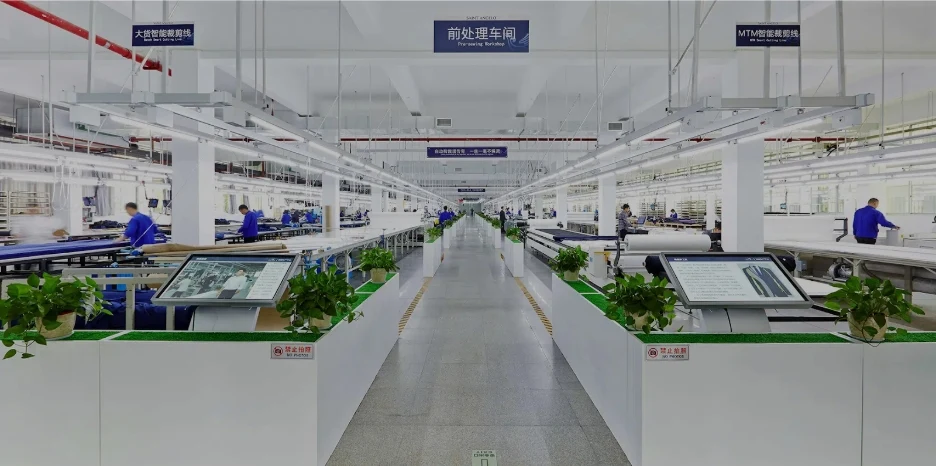
Modern clothing production in China has moved far beyond the “low-cost, low-quality” stereotype. It is now the world’s most established and high-efficiency center for intelligent suit manufacturing.
This shift in Chinese clothing manufacturing is characterized by moving away from labor-intensive practices to high-efficiency automation and technological manufacturing. This is a practical solution to rising labor costs.
China remains the world’s most established supply market due to its dense “textile clusters.” These clusters help minimize lead times and logistical expenses by grouping factories, raw material suppliers, and R&D suppliers.
Key facts relevant to China vs. USA sourcing comparison include:
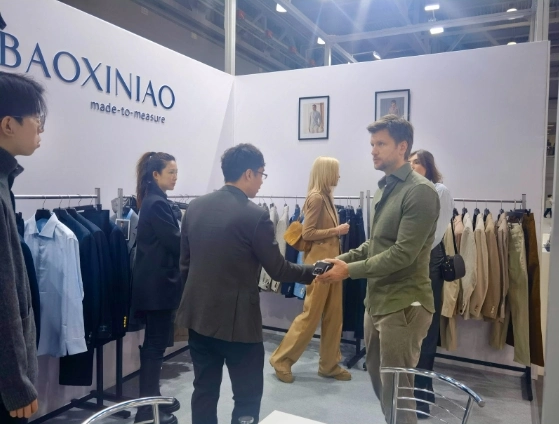
Modern clothing production in China has shifted from labor-intensive practices to high-tech automation. This makes the region a global leader in intelligent suit manufacturing.
Here is a quick summary of the advantages of sourcing from Chinese manufacturers:
| Category | Key Strength | Impact & Details |
| Infrastructure | Industrial Clusters | 70% of production is concentrated in five provinces (Guangdong, Shandong, Zhejiang, Fujian, Jiangsu), minimizing lead times and logistics costs. |
| Technology | Technological Leadership | Intelligent production line modeling allows a modern factory to produce 3 sets per worker daily—9x faster than traditional manual lines. |
| Innovation | Rapid Customization | In-house R&D teams (ODM/OEM) provide the agility to transform “rough ideas” into finished samples quickly. |
| Stability | Supply Chain Maturity | Close proximity to components and supporting systems within textile clusters significantly reduces overall supply chain risks. |
| Quality | Global Standards | Extensive experience with U.S. and EU certifications, strictly adhering to ISO 9001 and ASTM textile testing protocols. |
| Volume | Scalability | Massive capacity (e.g., Baoxiniao’s 200,000 units/year) while maintaining “one person, one pattern” precision for bespoke fits. |
American factories prioritize traditional craftsmanship. On the other hand, high-volume Chinese manufacturers use modular production units. A modern Chinese suit factory can produce 3 sets per worker daily. This production rate is 9x faster than traditional manual lines. This efficiency allows brands to maintain low inventory and respond quickly to market trends.
Below is a summary of the differences between American and Chinese Clothing Manufacturers:
| Feature | American Clothing Manufacturers | Chinese Clothing Manufacturers |
| Speed | 4–8 weeks for custom orders | 7–15 days with global delivery |
| Scale | Best for small batches (10–50 units) | Large quantity support (thousands) |
| Technology | Traditional manual tailoring | Intelligent production line modeling |
| Cost | High ($$$$) | Efficient and Scalable ($$) |
Deciding between manufacturing in China vs. the USA depends on your specific requirements for volume, speed, and technical precision. A domestic suit factory in the US offers a localized “boutique” feel. However, modern clothing production in China provides a combination of global serviceability and industrial efficiency.
Baoxiniao’s mastery of the MTM suit manufacturer’s process ensures that every garment adheres to the “one person, one pattern” system.
Our automated production line is capable of producing 200,000 units annually. This allows us to meet the demands for massive corporate contracts and handle small, bespoke orders.
Additionally, Chinese manufacturing provides a powerful, scalable solution for the global market. It is an ideal choice for brands seeking a balance between Italian-inspired design and high-tech stability.

In today’s modern age of technology, more people switch to being home-based entrepreneurs. One of the most challenging and profitable niches is the fashion industry. With this change, individual creators and aspiring entrepreneurs can compete with big brands from the comforts of a home office. However, for a small clothing business, the traditional “supply chain” […]
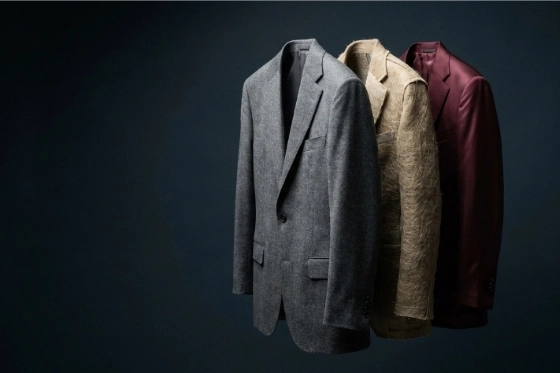
A masterfully crafted jacket’s shape depends on more than just the outer fabric. It relies on the complex structure hidden beneath the surface. Understanding the mechanics of suit construction is essential in suit manufacturing. This helps retailers and custom-made tailors create garments that feel like a second skin than an armor. Internal suit layers represent […]

The dress collar of a shirt frames your face. It also works with your shirt lapels to establish your professional image. Whether you’re investing in bespoke shirts or choosing ready-to-wear options, understanding collar styles is a crucial decision. Selecting a clothing collar that aligns with the proportions of your jacket and tie is an effective […]
ADDRESS: BAOXINIAO OFFICE BUILDING, BAOXINIAO INDUSTRIAL PARK, YONGJIA, ZHEJIANG