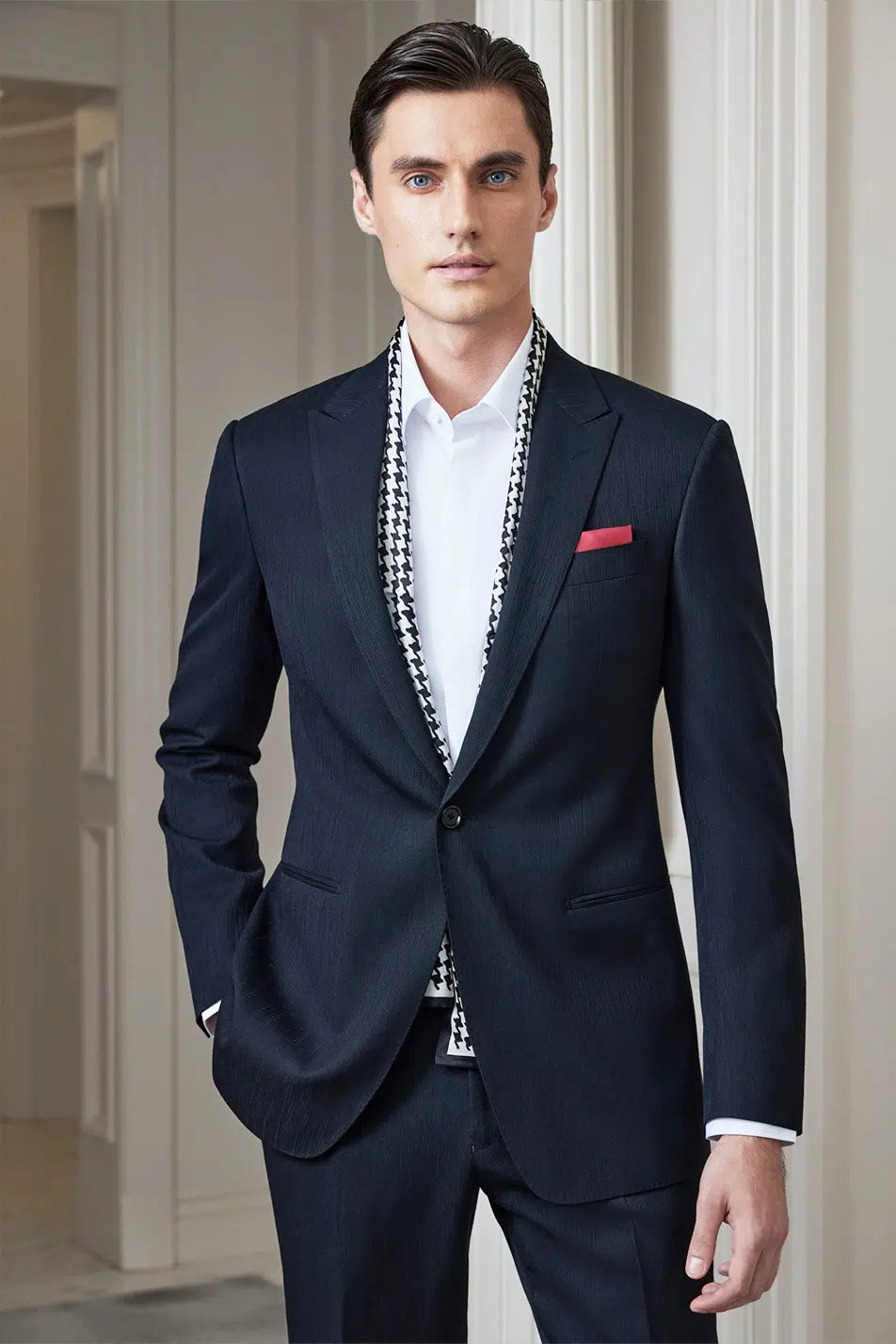
A well-fitted suit depends on three basic things:
When you understand these basics, you can create a sharp, tailored black suit that looks refined on different body types and markets.
For global brands, achieving this level of fit requires more than just good fabric. It involves:
At the same time, customers today expect suits that feel comfortable while still looking structured.

To start, fit has a bigger impact than design details. Even the most expensive suit will look poor if the fit is off.
On the other hand, a simple suit can look premium when it fits well.
When customers try on a suit, they often notice:
Because of this, brands that focus on fit often see better customer satisfaction.
This is especially true for a black suit tailored for formal or business use.
Next, you need to understand the core parts of a well-shaped suit that contribute to the overall look.
Here’s what a balanced silhouette includes:
The shoulder is the most important criterion of any suit jacket.
So, what should this area look like?
Ideally, the shoulder seam should end exactly where your natural shoulder ends.
Remember this: A good shoulder fit should:
Because shoulder adjustments are difficult after production, brands must get this right during pattern development.
After the shoulders, the chest area determines comfort and appearance.
When you button the jacket, it should close smoothly without pulling.
You should check for:
Pro Tip:
A proper black suit tailored fit should feel secure but not restrictive.
The waist area gives the suit its shape. Without this taper, the suit can look boxy.
What this area needs is a slight inward curve at the waist in order to define the body.
This creates a more flattering silhouette.
Key points to consider:
For global brands, this is where regional preferences matter. Some markets prefer a slimmer fit, while others prefer a relaxed shape.
Moving down the jacket, the sleeve length should end just above the wrist bone.
This allows a small portion of the shirt cuff to show.
Proper sleeve fit includes:
Small details like sleeve length can greatly improve how polished the suit looks.
A well-fitted jacket needs matching trousers to complete the outfit.
But beware, a poor trouser fit can ruin your overall appearance.
To correct this, you should focus on:
For an all-black tailored suit, trousers should match the jacket in both tone and structure.
To serve different customers, brands often offer several fit options where each fit type suits a different body shape and preference.
This includes:
Offering multiple fits allows brands to reach a wider audience. It also helps customers find a suit that matches their comfort level.
Fit is not only about measurements; fabric also determines how the suit behaves.
Some fabrics hold structure better, while others offer more flexibility.
For your reference, popular fabric choices include:
When selecting materials, you should consider how the fabric supports the intended fit.
For example:
One challenge for global brands is sizing consistency. Body shapes vary across regions.
This makes it difficult to use a single sizing standard.
Common challenges include:
To address this, brands often adjust patterns for different markets.
Consistent fit requires strong quality control during production.
That’s because even small errors can be a horror in how the suit actually fits.
Manufacturers should do quality checks that include:
These checks help ensure that each suit meets the intended design and maintains brand reputation.
Before launching a collection, brands should test their designs.
Fit testing allows you to identify problems early.
This process usually involves:
Adjustments are made based on these tests to improve the final product before large-scale production.
To maintain quality, it helps to follow a basic fit checklist.
You can use this when evaluating products or developing new designs.
| Area | What to Check |
| Shoulders | Clean alignment with no overhang |
| Chest | Smooth closure without pulling |
| Waist | Slight taper for shape |
| Sleeves | Proper length and clean lines |
| Trousers | Straight fit with correct length |
This checklist makes it easier to assess whether a suit meets quality standards.
Customers expect consistency when buying from a brand. If sizing changes between purchases, trust can decrease.
A well-made black tailored suit should fit the same way each time.
Consistency helps brands:
This is especially important for online sales, where customers cannot try the suit before buying.
A well-tailored suit depends on:
When you focus on these elements, you can create suits that meet global trends.
From shoulder alignment to trouser fit, every detail contributes to the final silhouette.
For brands, investing in fit development and quality control leads to better products and stronger customer trust.

Italian tailoring has easily earned the label “luxury” because the fabric, tailoring, fit, and finishing all work together for comfort and timeless elegance. It focuses on: For many buyers and fashion brands, Italian style represents the highest level of suit craftsmanship. When you understand the elements, you can better identify true luxury Italian suits and […]

A double-breasted suit’s design has an overlapping front and two rows of buttons that can be worn well for: You can wear it in both formal and smart settings as long as you carry yourself with confidence. If you want to upgrade your wardrobe or explore formal fashion, this style is worth considering. Read on […]
Black and white suits continue to sell well because they are simple, versatile, and suitable for many occasions. When you stock black and white suits, you offer customers a style that works for: While fashion trends change over time, black and white combinations remain consistent in demand. That’s because they are easy to wear and […]
ADDRESS: BAOXINIAO OFFICE BUILDING, BAOXINIAO INDUSTRIAL PARK, YONGJIA, ZHEJIANG